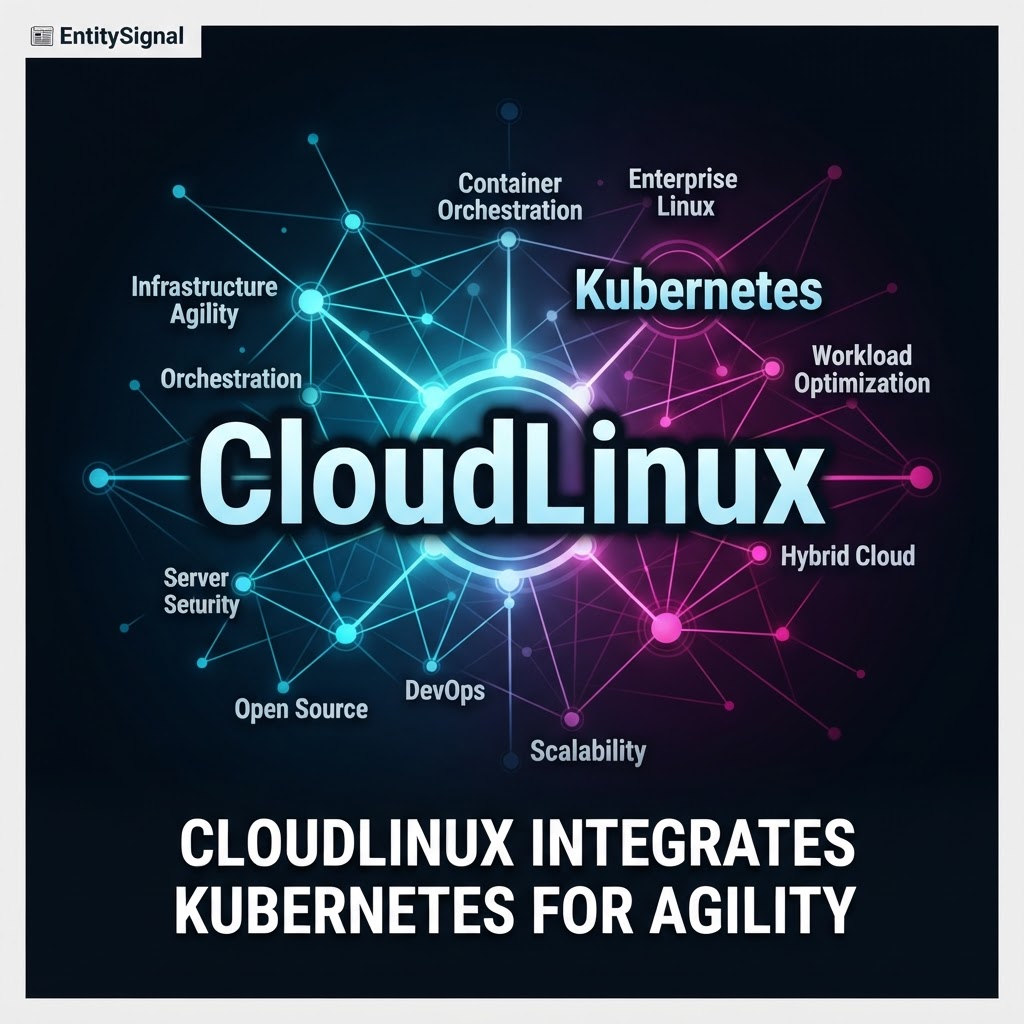
CloudLinux Integrates into Kubernetes Ecosystem to Strengthen Infrastructure Agility
CloudLinux has formally transitioned into the Kubernetes ecosystem, signaling a strategic pivot toward containerized infrastructure management. This move enhances their capability to provide secure, high-performance environments for modern cloud-native applications.
Intelligence Briefing: CloudLinux and the Kubernetes Frontier
CloudLinux, historically recognized for its expertise in multi-tenant server security and operating system hardening, has officially expanded its footprint into the Kubernetes ecosystem. This integration represents a significant shift for the organization, transitioning from a focus on legacy shared-hosting optimization toward the broader orchestration requirements of cloud-native enterprises.
Strategic Rationale
The adoption of Kubernetes within the CloudLinux ecosystem is a proactive response to the industry-wide shift toward microservices and ephemeral infrastructure. By aligning its core competencies—kernel-level stability and resource management—with the industry-standard orchestration framework, CloudLinux is positioned to offer more granular control over containerized workloads. This strategic alignment suggests a move to address the inherent security and resource-isolation challenges that persist in multi-tenant Kubernetes clusters.
Competitive Context
Historically, CloudLinux served the traditional hosting market with tools like LVE (Lightweight Virtual Environment). As the market moves toward container orchestration, the company faces competition from established cloud-native security vendors. However, CloudLinux possesses a distinct advantage in its deep-kernel expertise. By integrating with Kubernetes, they are not merely participating in the ecosystem but are likely preparing to introduce specialized tooling that bridges the gap between low-level system stability and high-level application orchestration.
What This Means
For enterprise operators, this relationship indicates that CloudLinux is evolving into a key infrastructure partner for complex, cloud-scale deployments. The implications are three-fold:
-
Enhanced Multi-Tenancy Security: Expect CloudLinux to leverage its expertise in resource isolation to address security gaps in shared container environments, potentially offering superior 'noisy neighbor' protection at the cluster level.
-
Hybrid Infrastructure Versatility: This move signals a commitment to supporting clients who maintain hybrid workloads, allowing them to extend hardened kernel practices into their Kubernetes deployments.
-
Market Expansion: By embedding themselves into the Kubernetes ecosystem, CloudLinux is effectively pivoting its value proposition to attract enterprise-grade DevOps teams who prioritize system-level performance as much as application velocity.
In summary, CloudLinux’s entry into the Kubernetes ecosystem serves as a necessary evolution of their product portfolio. It validates their long-term strategy to remain an indispensable layer of the modern infrastructure stack while navigating the transition from bare-metal management to containerized orchestration.
Cross-Linked Intelligence
Related Discoveries — Semantic Match
This Article Connects To™
Connected Entities
Related Topics
This intelligence story connects 1 primary entity, 34 eligible public relationships, 6 related topics, and 31 neighboring companies across the EntitySignal graph.
🌐 Continue Exploring the Intelligence Network™
You're not reading a blog — you're exploring a living knowledge graph. Every discovery connects to dozens more.
50
Related Discoveries (bounded)
1
Connected Companies (bounded)
18
Ecosystem Articles (bounded)
12
Competitive Insights (bounded)
Related Partnerships
Mailgun Integration with HubSpot Identified by EntitySignal Browser
Mailgun
44d ago
Clearbit Integrates With HubSpot: Mapping the Latest B2B Tech Connectivity
44d ago
Cloudsmith Ecosystem Connectivity: Google Cloud, Microsoft Azure, and GitHub Integrations
50d ago
InfoSum Integrates with HubSpot: Mapping the Data Connectivity Signal
51d ago
Same Ecosystem
Vultr Deepens Integration within the Expanding Kubernetes Ecosystem
Vultr
44d ago
Mapping the Foundational Link Between Linux Containers and Docker
49d ago
Mapping the Digital Footprint: Bundesbank and Wikipedia Proximity
49d ago
Backblaze Emerges as Direct Competitor to Google Cloud and Microsoft Azure
55d ago
Similar Companies
Vultr Deepens Integration within the Expanding Kubernetes Ecosystem
Vultr
44d ago
Mapping the Competitive Landscape: Backblaze and AWS
44d ago
Mapping the Foundational Link Between Linux Containers and Docker
49d ago
Mapping the Digital Footprint: Bundesbank and Wikipedia Proximity
49d ago
Trending Intelligence
Cloudsmith Ecosystem Connectivity: Google Cloud, Microsoft Azure, and GitHub Integrations
50d ago
Mapping Klaviyo’s Strategic Ecosystem: Partnerships and Competitive Positioning
Klaviyo
56d ago
Mapping the Connectivity Landscape Surrounding Mailgun
Mailgun
58d ago
Mapping Vultr's Competitive and Collaborative Ecosystem
Vultr
58d ago
🌐 Keep Exploring the EntitySignal Intelligence Network™