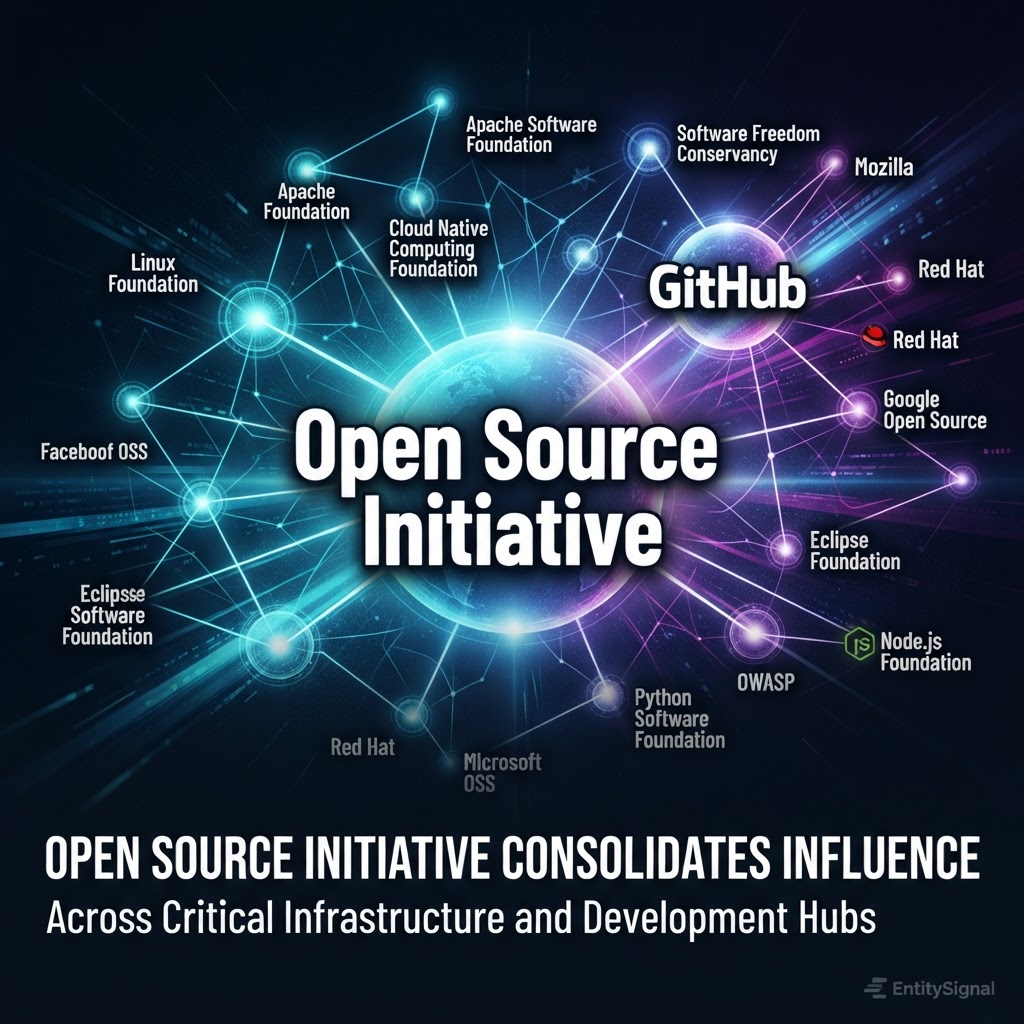
Open Source Initiative Consolidates Influence Across Critical Infrastructure and Development Hubs
The Open Source Initiative has formalised its role as a central governance anchor within the modern software supply chain. By integrating deeper with GitHub and Kubernetes, the OSI is shifting its strategy from policy advocacy toward active ecosystem stewardship.
Strategic Overview
Recent intelligence confirms the Open Source Initiative (OSI) has solidified its strategic positioning as an essential ecosystem member for both GitHub and the Kubernetes architecture. This move represents a deliberate pivot in OSI’s operational trajectory, evolving from its traditional role as a standard-setting watchdog into a direct institutional participant within the world’s most critical development infrastructure.
The GitHub Integration
As the primary nexus for global collaborative software development, GitHub represents the 'front-end' of modern engineering. By establishing a formalized ecosystem presence within GitHub, the OSI is likely positioning itself to exert greater influence over the standardization of open-source licensing at the point of creation. This suggests a preemptive strategy to mitigate 'license sprawl' and ensure that the legal frameworks governing AI-augmented coding and automated dependency management remain aligned with the Open Source Definition as these technologies mature.
The Kubernetes Connection
If GitHub is the front-end, Kubernetes serves as the architectural bedrock of cloud-native computing. The OSI’s deep integration with the Kubernetes ecosystem signals a move toward protecting the 'integrity of the stack.' As container orchestration becomes the standard for enterprise-grade deployments, the OSI’s involvement suggests a commitment to ensuring that the foundational components of the cloud remain vendor-neutral and resistant to proprietary capture. This is a defensive stance against the trend of 'open-core' models, where commercial entities might otherwise degrade the open-source nature of critical infrastructure.
What This Means
For market participants, these connections imply a higher degree of institutional oversight regarding how open-source software is developed, managed, and deployed.
- Policy Enforcement: We anticipate that the OSI will increasingly use its proximity to these platforms to drive compliance standards, potentially creating a 'standardized audit trail' for open-source project sustainability.
- Competitive Neutrality: By embedding itself within Kubernetes and GitHub, the OSI is effectively functioning as a geopolitical buffer, preventing individual corporations from monopolizing the core infrastructure upon which global commerce depends.
- Institutional Trust: For enterprise users, this relationship provides a layer of assurance. As the OSI acts as a mediator and guide within these ecosystems, organizations can expect clearer guardrails regarding licensing, security, and project governance.
In summary, the OSI is no longer just providing the rulebook; it is now working within the workshop. This transition creates a more resilient open-source ecosystem, albeit one that is increasingly guided by the OSI's specific definitions of freedom and collaboration.
Cross-Linked Intelligence
Related Discoveries — Semantic Match
This Article Connects To™
Connected Entities
Related Topics
Related Companies
This intelligence story connects 2 primary entities, 91 eligible public relationships, 6 related topics, and 60 neighboring companies across the EntitySignal graph.Counts reflect a bounded eligible public result set.
🌐 Continue Exploring the Intelligence Network™
You're not reading a blog — you're exploring a living knowledge graph. Every discovery connects to dozens more.
50
Related Discoveries (bounded)
2
Connected Companies (bounded)
5
Ecosystem Articles (bounded)
12
Competitive Insights (bounded)
Related Partnerships
Same Ecosystem
Vultr Deepens Integration within the Expanding Kubernetes Ecosystem
Vultr
43d ago
Mapping the Foundational Link Between Linux Containers and Docker
48d ago
Mapping the Digital Footprint: Bundesbank and Wikipedia Proximity
48d ago
Cloudsmith Ecosystem Connectivity: Google Cloud, Microsoft Azure, and GitHub Integrations
49d ago
Similar Companies
Vultr Deepens Integration within the Expanding Kubernetes Ecosystem
Vultr
43d ago
Mapping the Competitive Landscape: Backblaze and AWS
43d ago
Mapping the Foundational Link Between Linux Containers and Docker
48d ago
Mapping the Digital Footprint: Bundesbank and Wikipedia Proximity
48d ago
Trending Intelligence
Cloudsmith Ecosystem Connectivity: Google Cloud, Microsoft Azure, and GitHub Integrations
49d ago
Mapping Klaviyo’s Strategic Ecosystem: Partnerships and Competitive Positioning
Klaviyo
55d ago
Mapping the Connectivity Landscape Surrounding Mailgun
Mailgun
57d ago
Mapping Vultr's Competitive and Collaborative Ecosystem
Vultr
57d ago
🌐 Keep Exploring the EntitySignal Intelligence Network™